
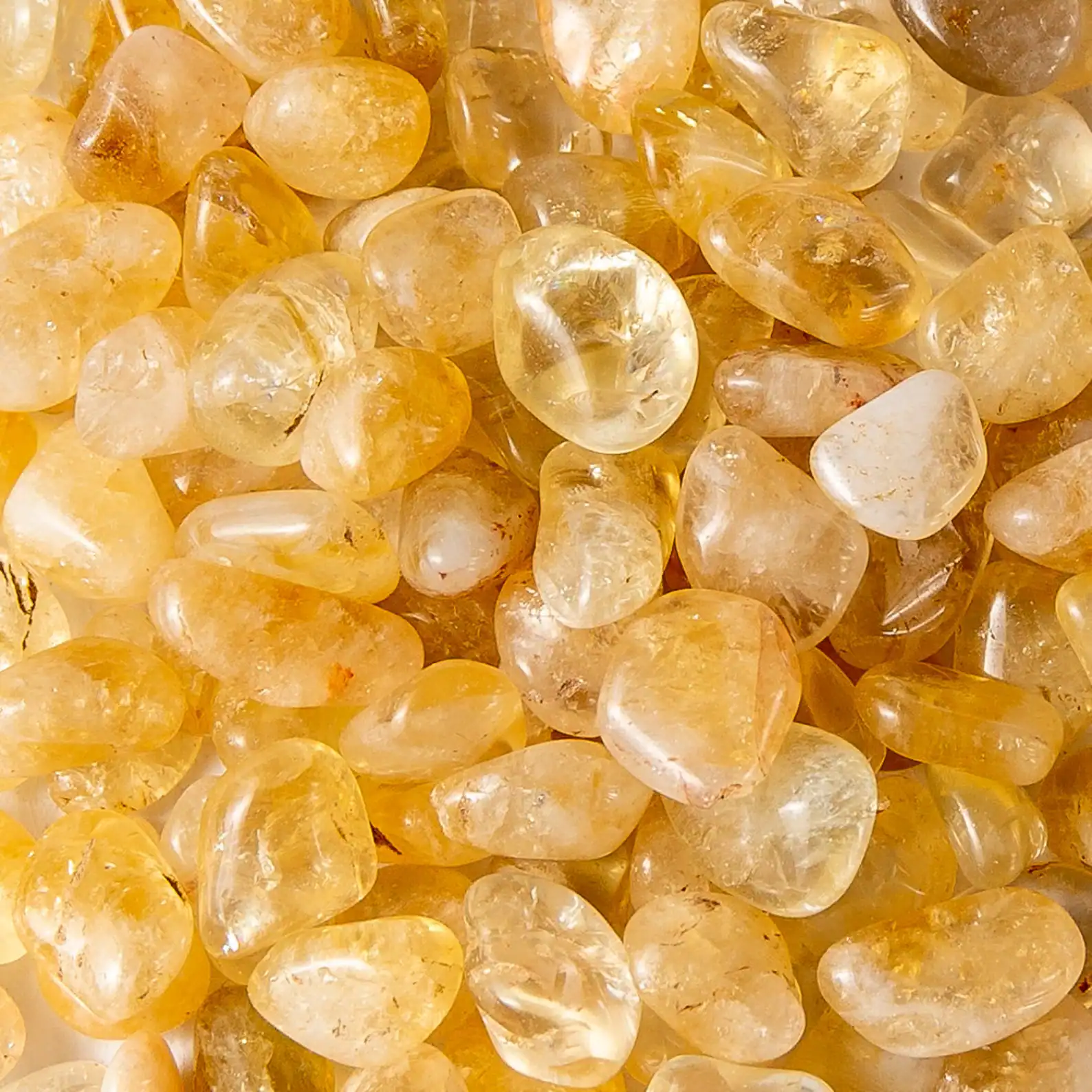
Citrine Tumble

$5.00

Citrine Tumble - Polished Yellow Quartz Citrine is a yellow to orange variety of quartz (SiO₂). These tumbled stones have been polished smooth, showcasing the warm golden tones that give citrine its name (from the Latin "citrina," meaning yellow). What Causes the Yellow Color: Natural citrine's color is caused by trace amounts of iron (Fe³⁺) in the crystal structure. The yellow to orange hue results from the oxidation state of iron impurities within the quartz. Important Note About Citrine: Natural citrine is relatively rare in nature. Much of the citrine available commercially is actually heat-treated amethyst or smoky quartz. When amethyst is heated to approximately 300-400°C (572-752°F), it can turn yellow to orange. Natural citrine tends to be a paler yellow than heat-treated specimens. Physical Properties: Chemical Formula: SiO₂ (silicon dioxide) Hardness: 7 on the Mohs scale (good scratch resistance) Luster: Vitreous (glass-like) when polished Formation & Occurrence: Natural citrine forms in igneous and metamorphic rocks. Brazil is the leading producer of both natural and heat-treated citrine. Other sources include Spain, Madagascar, Russia, and the United States. Care: Citrine is durable for everyday handling. Avoid prolonged exposure to high heat. Images shown are examples only—each tumbled stone is unique and your stone will vary in color, pattern, and size. Shipping will be calculated at checkout. Sources: Wikipedia, Britannica

Product and photo may differ. We curate each item with care, and actual contents may vary based on availability and intuitive selection.

Citrine Tumble – Polished Yellow Quartz

Citrine is a yellow to orange variety of quartz (SiO₂). These tumbled stones have been polished smooth, showcasing the warm golden tones that give citrine its name (from the Latin “citrina,” meaning yellow).

What Causes the Yellow Color:
Natural citrine’s color is caused by trace amounts of iron (Fe³⁺) in the crystal structure. The yellow to orange hue results from the oxidation state of iron impurities within the quartz.

Important Note About Citrine:
Natural citrine is relatively rare in nature. Much of the citrine available commercially is actually heat-treated amethyst or smoky quartz. When amethyst is heated to approximately 300-400°C (572-752°F), it can turn yellow to orange. Natural citrine tends to be a paler yellow than heat-treated specimens.

Physical Properties:

  • Chemical Formula: SiO₂ (silicon dioxide)
  • Hardness: 7 on the Mohs scale (good scratch resistance)
  • Luster: Vitreous (glass-like) when polished

Formation & Occurrence:
Natural citrine forms in igneous and metamorphic rocks. Brazil is the leading producer of both natural and heat-treated citrine. Other sources include Spain, Madagascar, Russia, and the United States.

Care:
Citrine is durable for everyday handling. Avoid prolonged exposure to high heat.

Images shown are examples only—each tumbled stone is unique and your stone will vary in color, pattern, and size. Shipping will be calculated at checkout. Sources: Wikipedia, Britannica