
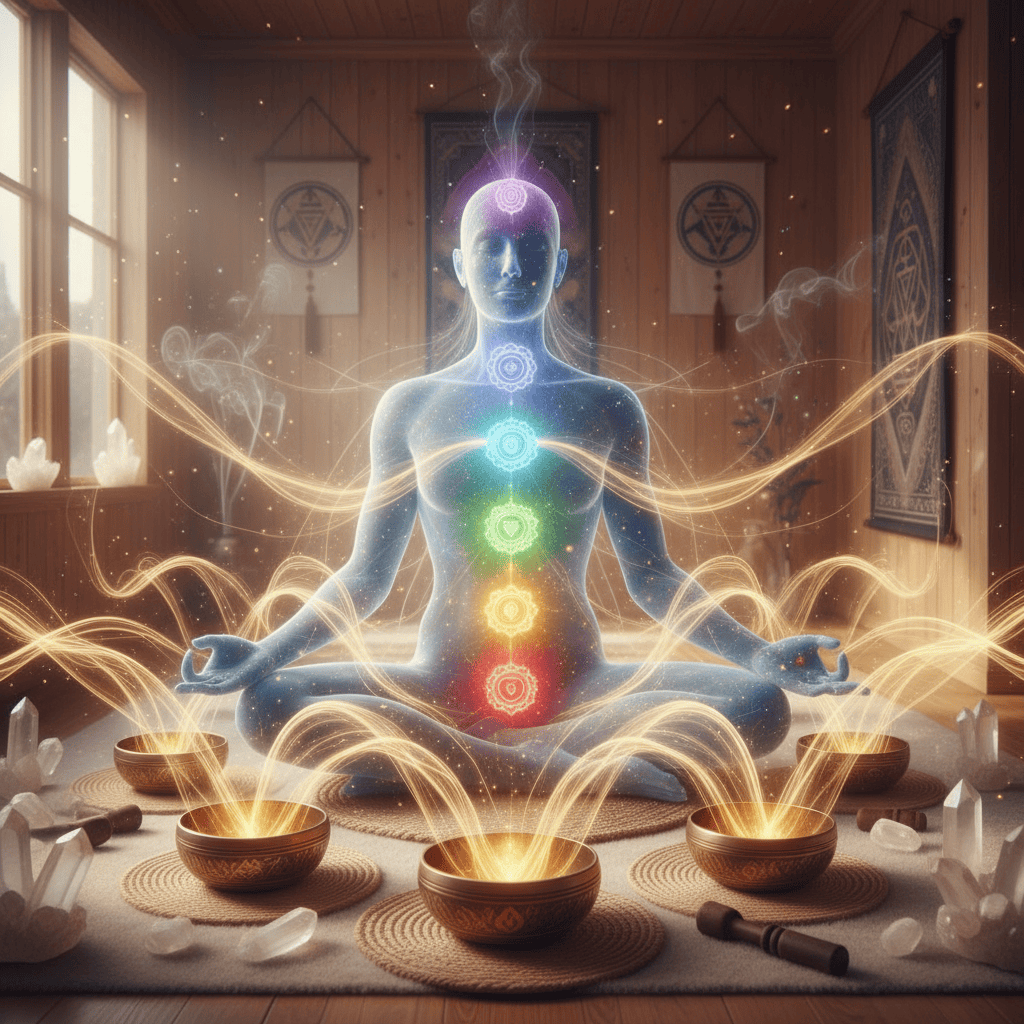
What Is Sound Healing? Understanding Vibrational Healing
Gong sound baths have become a popular form of sound healing—immersive experiences where participants lie or sit while gongs, singing bowls, and other instruments create waves of vibration. But what does the research say about gong sound bath healing and its benefits? Can sound actually reduce stress, shift brainwaves, and support well-being? This article explores the science and practice of gong sound baths.
What Is a Gong Sound Bath?
A gong sound bath is a group or individual session in which a practitioner plays gongs, often accompanied by singing bowls, chimes, or other resonant instruments. Participants typically lie on mats or sit in chairs, fully clothed, and allow the sound to wash over them. There’s no music to follow—instead, you experience an evolving landscape of tones, overtones, and vibrations that can induce deep relaxation and altered states of awareness.
Gong Sound Bath Healing: The Science of Sound and Vibration
Sound travels through the body. When you hear or feel low-frequency vibrations—like those from a large gong—your tissues can resonate. Some researchers propose that this resonance may help release tension, shift nervous system state, and support a sense of ease. While large-scale clinical trials on gong baths specifically are limited, related research offers insight.
Studies on music therapy and sound-based interventions have shown benefits for stress reduction, anxiety, and mood. Research on binaural beats and certain frequencies suggests that sound can influence brainwave patterns—potentially encouraging alpha (relaxed alertness) or theta (deep relaxation, meditation) states. Gong baths, with their rich overtones and sustained vibrations, may produce similar effects.
Stress, Cortisol, and the Parasympathetic Response
Preliminary studies on sound baths and gong therapy report reductions in tension, anxiety, and negative mood. Some participants show changes in heart rate and heart rate variability—markers of parasympathetic activation. The experience of lying still while being enveloped by sound creates conditions that favor the “rest-and-digest” response: minimal cognitive demand, sensory immersion, and a sense of safety.
Many participants describe feeling “reset” after a session—calmer, more centered, and sometimes more creative or introspective. These subjective reports align with the idea that gong sound baths support nervous system regulation and emotional processing.
Benefits of Gong Sound Baths
People seek gong sound baths for a variety of reasons:
- Stress relief and relaxation
- Reduced anxiety and overwhelm
- Improved sleep
- Emotional release and processing
- Enhanced meditation or contemplative practice
- Support during life transitions or grief
Whether benefits come from the vibrations themselves, the meditative context, or the combination of both, many find gong baths to be a powerful tool for restoration.
What to Expect in a Session
You’ll typically lie on a mat with a blanket and perhaps a pillow. The room is dimly lit and quiet. The practitioner begins playing the gongs, and the sound builds and evolves over 45–90 minutes. You may feel vibrations in your chest, belly, or limbs. Some people drift into a dreamlike state; others remain alert but deeply relaxed. There’s no “right” way to experience it—simply allow whatever arises. Afterward, there’s often a period of silence before gentle transition back.
Who Benefits
Gong sound baths are suitable for most people. They require no experience or special preparation. If you have sensitivity to loud sound, tinnitus, or certain medical conditions, it’s wise to check with the practitioner beforehand. Many offer earplugs or a quieter position for those who need it.
Experience gong sound bath healing in Arlington Heights at Sacred Ground—our holistic center offers sound baths in a nurturing environment designed for deep rest and renewal.